
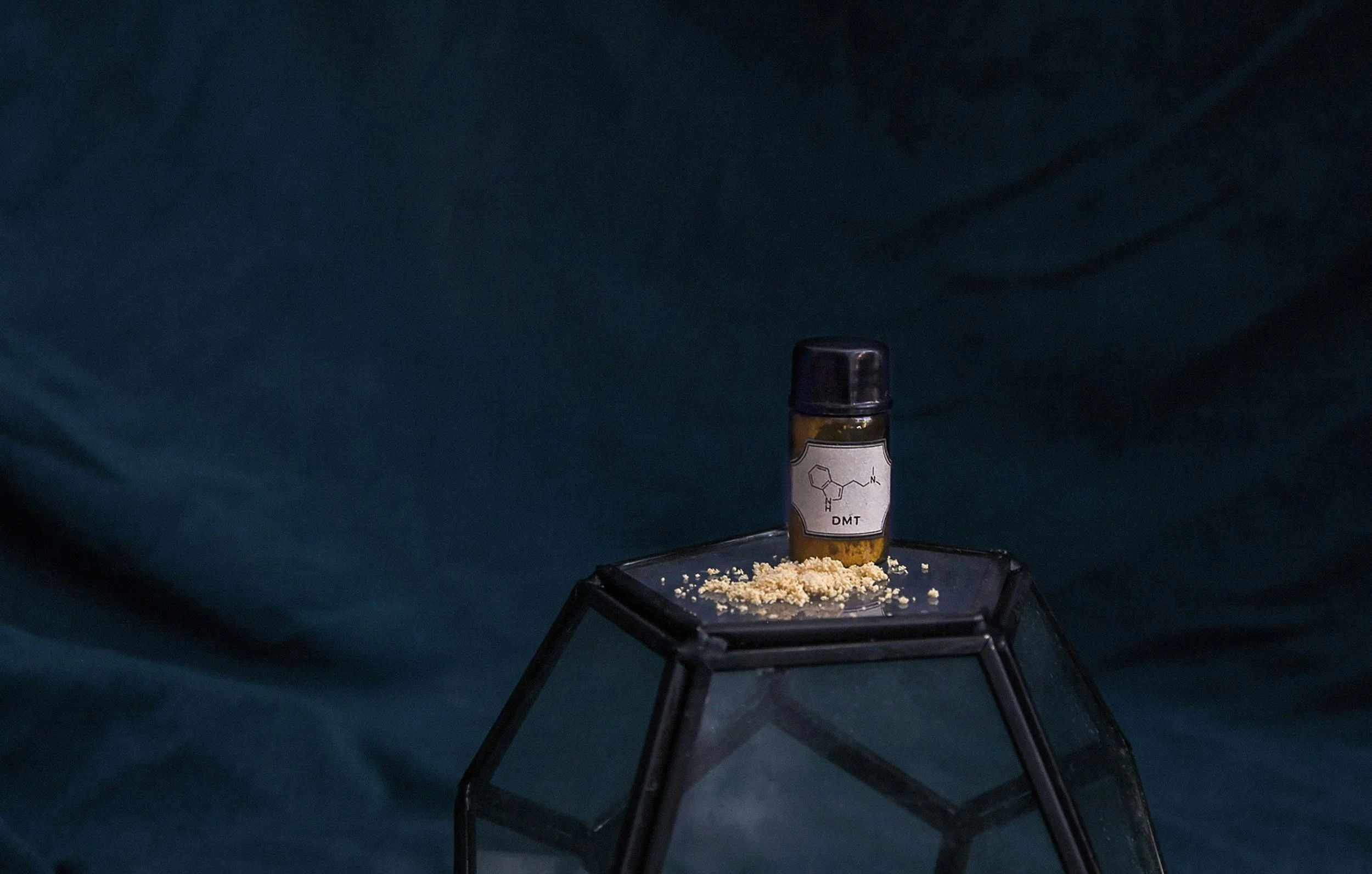
DMT
N,N-Dimethyltryptamine
Overview
DMT (N,N-Dimethyltryptamine) is a naturally occurring psychedelic compound found in a wide variety of plants and trace amounts in mammals. It is the primary psychoactive component in ayahuasca, and it has also been studied as a standalone compound due to its uniquely rapid and intense effects.
When isolated, DMT produces a brief but profound alteration of consciousness, often described as immersive, disorienting, or ineffable.
Research & Context
DMT has been of scientific interest for decades due to its powerful effects on perception, cognition, and sense of self. Research has explored its role in:
Altered states of consciousness
Perception and meaning-making
Mystical or non-ordinary experiences
Psychological flexibility and insight
Unlike longer-acting psychedelics, DMT’s effects are typically very short in duration, yet subjectively intense. This compressed intensity presents unique challenges for interpretation and integration.
Psychological & Experiential Impact
Reported effects of DMT may include:
Rapid dissolution of ordinary sense of self
Vivid or immersive internal imagery
Altered perception of time and space
Feelings of entering non-ordinary or symbolic realms
Emotional intensity ranging from awe to fear
Experiences often feel difficult to describe or contextualize afterward. Insight may feel immediate — but meaning often unfolds slowly over time.
Intensity does not equal clarity. Integration is essential.
Potential Risks & Considerations
DMT is frequently described as “short-acting,” but this does not mean low-risk.
Potential concerns include:
Acute fear or panic
Psychological overwhelm
Disorientation or confusion after the experience
Difficulty integrating or grounding afterward
Exacerbation of underlying mental health conditions
Risk increases when experiences are:
Poorly contextualized
Rushed or repeated without integration
Undertaken without screening or support
For some individuals, the abruptness of the experience can be destabilizing.
Relationship to Ayahuasca
DMT is the primary psychoactive compound in ayahuasca, but the two should not be conflated.
Ayahuasca involves:
A prolonged experience
Ritual and cultural containment
Community and ceremonial context
Isolated DMT lacks these structures and therefore presents different psychological and integration challenges.
Understanding this distinction is essential for responsible education.
Legal Status (U.S.)
DMT is classified as a Schedule I substance under U.S. federal law and is illegal to manufacture, possess, or use outside of approved research settings.
Legal status varies internationally, and individuals are responsible for understanding and complying with local laws.
Our Perspective
DMT is often portrayed as a shortcut to insight. We strongly disagree with that framing.
DMT can generate powerful experiences — but power without preparation, context, and integration can lead to confusion rather than healing.
Responsible engagement requires:
Psychological readiness
Respect for intensity and risk
Trauma-informed framing
Adequate integration support afterward
Not all insights arrive fully formed. Many require time, reflection, and grounding.
Integration Matters
Because DMT experiences are often brief yet intense, integration is especially important.
Integration support helps individuals:
Make sense of disorienting or symbolic material
Stabilize emotional responses
Avoid premature interpretation or over-identification
Translate experience into grounded understanding
Without integration, experiences may remain fragmented or unsettling.